Give Air Monitoring A Clear Purpose
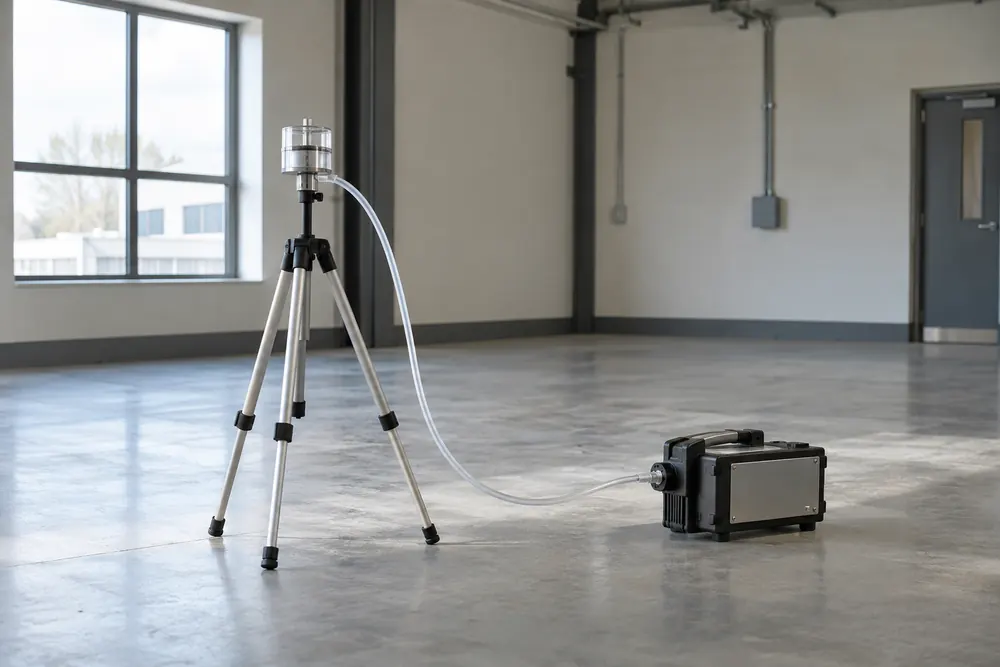
Asbestos air testing measures airborne fibres under defined sampling and analytical conditions. The monitoring needs a clear purpose, such as background measurement, assessment around controlled works or support for a clearance procedure. An isolated air result cannot answer every question about asbestos risk in a building.
We help Leeds commercial clients describe the work and the decision the testing needs to support. Share the survey findings, removal method if available and the area concerned. Explain whether the building is occupied, whether an incident has occurred and which activities have already been stopped or isolated.
Different Types Of Monitoring
Background monitoring can help establish conditions before planned work, while leak monitoring may be specified around a removal enclosure. Personal monitoring assesses exposure associated with a person’s work and is different from a fixed-point measurement in a room. The sampling strategy must match the question and site conditions.
Clearance air testing forms part of a wider assessment where required after asbestos removal. It must not be presented as a substitute for the inspection and cleaning stages. Ask the analyst to explain the monitoring category, sample locations, analytical method and limits on interpreting the results.
Accreditation And Analytical Guidance
HSE’s HSG248, Asbestos: The analysts’ guide, sets out analytical procedures and guidance on sampling and clearance. Appropriate UKAS accreditation is required for asbestos air analysis and clearance work. Check that the organisation’s current accreditation scope covers the activities you are commissioning.
The Control of Asbestos Regulations 2012 provides the regulatory framework for asbestos work. Air monitoring supports specific assessments within that framework, but a result is only as useful as the sampling strategy and its context. The report should identify what was measured and the conditions in which sampling took place.
Four-Stage Clearance
Where a removal project requires four-stage clearance, the analyst checks the site condition and completeness of the work, carries out a detailed visual inspection, undertakes clearance air monitoring and completes a final assessment after the enclosure is dismantled. The process must be completed satisfactorily before the relevant certificate is issued.
HSE strongly recommends that the building owner or client appoints the clearance analyst independently of the removal contractor. Agree this appointment and the clearance scope before removal begins. The project programme should allow for inspection findings and any further cleaning rather than assuming an automatic pass.
How The Monitoring Is Arranged
First, define the purpose and boundaries of the assessment. Identify the work area, nearby occupied spaces and the planned use of the result. Existing survey information and a current plan of work help the analyst assess the required sampling arrangement.
Next, agree access and coordination with the site contact and any removal contractor. Confirm when the area will be ready and who can authorise entry or change the programme. The analyst needs appropriate conditions to inspect and sample rather than a visit booked solely around an assumed finish time.
After monitoring, review the report with the original question in mind. Retain sample references, locations, dates, conditions and any stated limitations alongside the relevant works records. Where clearance applies, keep the certification and supporting documents with the project handover information.
What Affects Air Testing Cost
The monitoring purpose, number of locations, site access and duration of attendance affect the quotation. Four-stage clearance requires a different scope from background sampling because it includes a wider inspection process. The complexity and readiness of the work area can also influence the analytical attendance needed.
Ask whether the quotation includes site attendance, analysis, reporting, clearance documentation where applicable and any additional visits. Make the arrangements for delays or an area that is not ready clear before appointment. We do not publish a generic price that could omit required inspection work.
Understand The Limits Of A Result
An air test does not identify every asbestos-containing material in the building. A low airborne fibre result at one time does not mean that drilling a concealed board or disturbing insulation later is safe. Building material identification and the control of future work remain separate tasks.
If material has been disturbed, stop the affected work and restrict access while specialist advice is obtained. Do not use a requested air test as a reason to restart work before the source and extent of the problem are assessed. Our testing, survey and removal pages explain the connected investigations and controls.
Read the HSE asbestos guidance and check the requirements for your specific project before work starts.
Service FAQs
Does An Air Test Prove A Building Has No Asbestos?
An air test does not prove a building has no asbestos. It records airborne fibre conditions for the sampling location and period, with the limitations of the analytical method. Materials can still be present in the building fabric. A suitable survey and material analysis answer different questions from air monitoring and remain necessary where appropriate.
Who Should Appoint The Clearance Analyst?
The clearance analyst should ideally be appointed independently by the building owner or client, as HSE strongly recommends. Check that the organisation holds appropriate UKAS accreditation for the required work. Agree its scope and access directly before removal begins, and allow time for all required inspection and clearance stages before reoccupation.